Los Angeles / Long Beach
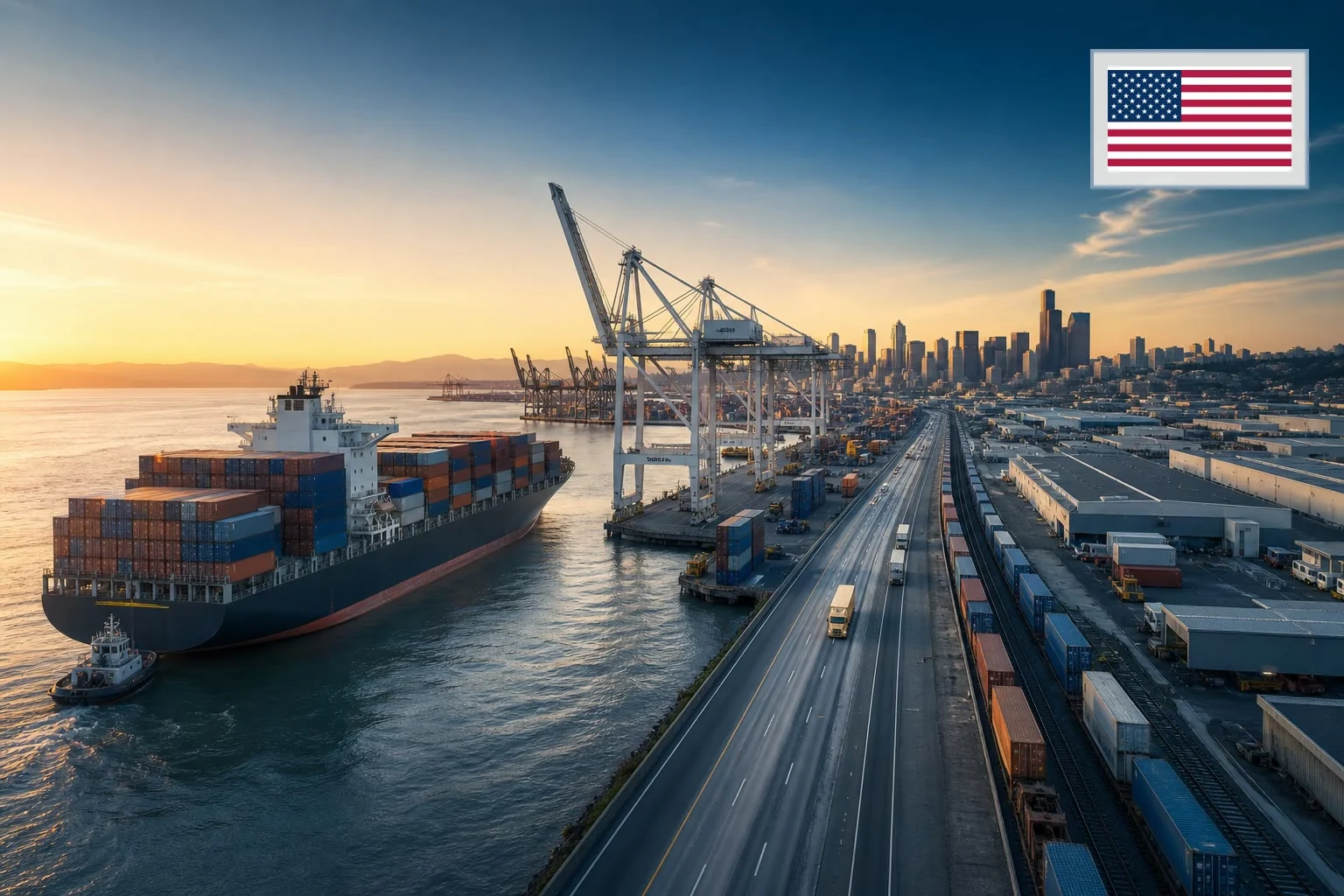
The highest-capacity trans-Pacific gateway. Fastest ocean leg to the US, and the one most exposed to congestion and dwell charges.

Country guide · China → USA
Ocean, air, and express from South China to the US west and east coasts. The freight is the easy part: US import clearance runs on deadlines that start before your container is even loaded, so we file ISF and AMS ourselves rather than hoping a subcontractor remembers.
West Coast FCL range
East Coast via Panama
ISF deadline before loading
US ports quoted
Gateways
Congestion, dwell, and inland trucking cost often matter more than the headline ocean days. Sometimes the cheaper landed number is a longer sail into a quieter port.
The highest-capacity trans-Pacific gateway. Fastest ocean leg to the US, and the one most exposed to congestion and dwell charges.
Pacific alternatives that often clear faster in a congested market and suit Pacific Northwest and Northern California delivery.
Via the Panama Canal. The right call when the delivery address is in the Northeast and the inland trucking saving beats the extra sea days.
Southeast and Gulf gateways with strong inland rail connections and typically lower congestion than the primary ports.
Mode planner
Planning ranges door to door, not port to port. Which one is right depends entirely on the date the stock has to sell — a stockout usually costs more than the rate gap between sea and air.
| Mode | Planning range | Best for |
|---|---|---|
| Air freight | 3–7 days | Launch stock, replenishment, high value density |
| Express courier | 3–7 days | Samples and parcels under a few hundred kg |
| Sea FCL — West Coast | 13–18 days | Planned volume into LA, Long Beach, Oakland, Seattle |
| Sea FCL — East Coast | 28–35 days | New York/NJ and Savannah via the Panama Canal |
| Sea LCL | +5–8 days | Smaller or multi-supplier volume, priced by CBM |
US customs & compliance
US import clearance is unusually deadline-driven, and the ISF is the one that bites — it must reach CBP 24 hours before the box is loaded in China, which is before most importers are even thinking about customs. We file it as part of the booking.
| Requirement | Who handles it | When |
|---|---|---|
| ISF / 10+2 | Importer — Prodoer files | 24h before loading in China |
| AMS manifest | Carrier / NVOCC | 24–48h pre-sailing |
| HTS classification | Broker — Prodoer | Before entry filing |
| CBP entry (form 7501) | Broker — Prodoer | On arrival |
| Customs bond | Importer, single or continuous | Before first entry |
| MPF 0.3464% | Importer, min and max capped | At entry |
| HMF 0.125% | Importer, ocean freight only | At entry |
| FDA / FCC / CPSC | Importer, product dependent | Before import |
How the lane runs
Duty, Section 301 exposure, and any agency requirement all follow from classification. We settle it before quoting so the landed number is real.
We file the ISF and confirm the AMS manifest against the sailing cut-off. Documents reach you the day they are filed.
One thread covers vessel or flight milestones, transshipment, and berth. You hear about a blanked sailing from us.
In-house entry, duty, MPF and HMF, then drayage and delivery to door, DC, or Amazon fulfilment centre.
By sea, 13–18 days port to port to the West Coast and 28–35 days to the East Coast via Panama. By air, 3–7 days door to door. Add origin pickup, customs, and last-mile delivery to any ocean figure for the real door-to-door number, plus five to eight days if the cargo is moving LCL rather than in a full container.
ISF — Importer Security Filing, also called 10+2 — is the data set CBP requires before your cargo is loaded at the Chinese port. The deadline is 24 hours before vessel loading, which catches importers who assume customs is a destination problem. Late or missing filings carry per-shipment penalties and can mean the container is held. We file it in-house as part of the booking so the deadline is tracked automatically.
Duty is set by your product's HTS classification, and many China-origin classifications also carry Section 301 tariffs on top. Ocean shipments additionally pay MPF at 0.3464 percent, subject to minimum and maximum caps, and HMF at 0.125 percent of value. Under DDP we settle all of it and quote you one landed number; under FOB you or your broker pay CBP directly.
Yes. A bond guarantees payment of duties and fees to CBP, and you need one before your first entry. A single-entry bond covers one shipment; a continuous bond covers a year and is normally cheaper once you are shipping regularly. We arrange either as part of the entry setup if you do not already hold one.
It depends on where the cargo is going, not just which port is closest to China. Los Angeles and Long Beach give the shortest ocean leg but carry the most congestion risk. Oakland, Seattle, Savannah, and Houston often clear faster and can win on landed cost once inland trucking is priced in. We quote the port and final-mile combination against your actual delivery address.
China → USA lane quote
Send the cargo, origin, and US delivery address. One agent replies with compared modes, the classification and duty position, and the ISF filing plan.
Send the cargo, origin, and US delivery address. One agent replies with compared modes, the classification and duty position, and the ISF filing plan.