Air freight
For launch stock and urgent replenishment when the carrier accepts the exact battery profile. FAA and IATA rules apply — standalone lithium-ion is often restricted on passenger aircraft.

Special handling · China → USA
Standalone cells, packs, and batteries inside equipment shipped from Shenzhen, Guangzhou, and Hong Kong to the USA. US lithium battery rules (DOT 49 CFR 173.185, FAA and IATA for air, IMDG for sea) are stricter than many importers expect — we review the chemistry, watt-hour rating, and packing relationship first, then quote the mode that will actually be accepted, not the one that looks cheapest.
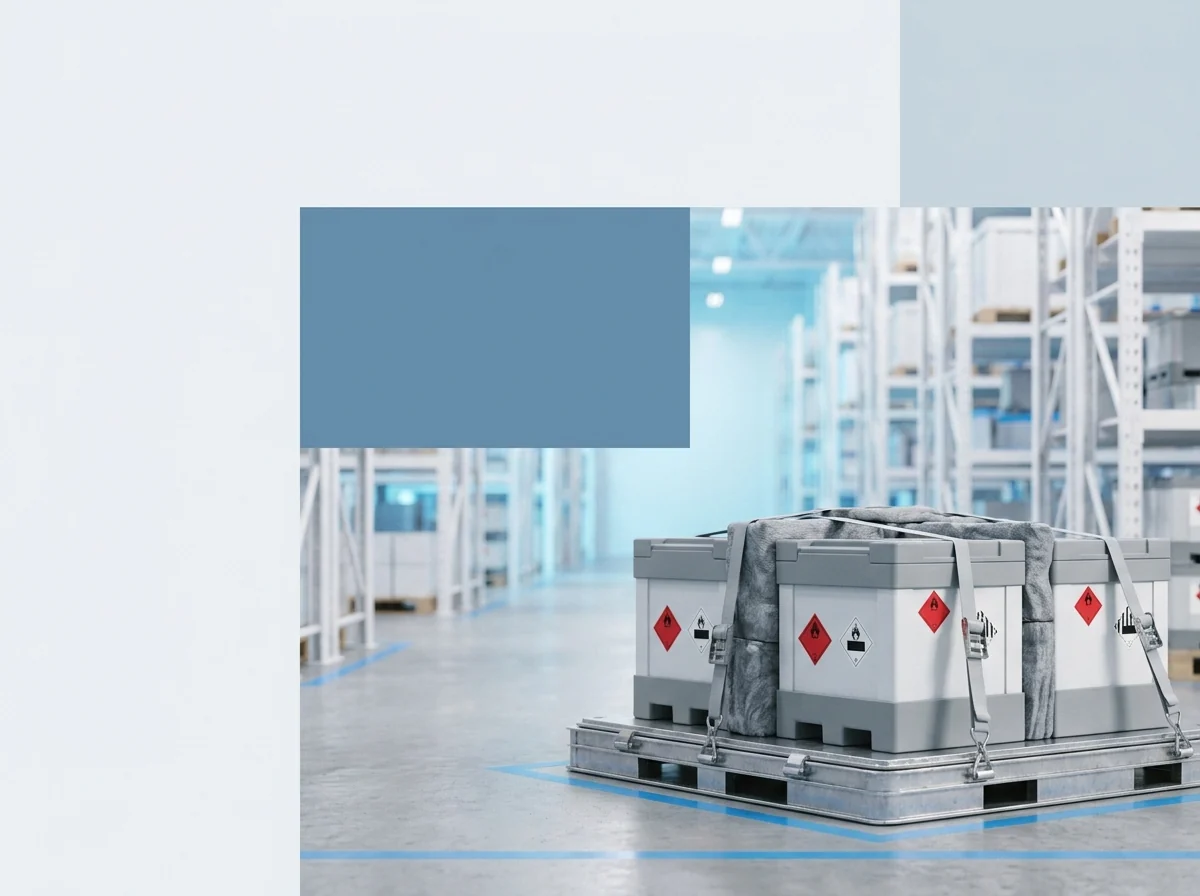
Document pre-check target
US lithium battery rule
Compared per profile
Specialist review per shipment
Mode comparison
For launch stock and urgent replenishment when the carrier accepts the exact battery profile. FAA and IATA rules apply — standalone lithium-ion is often restricted on passenger aircraft.
For planned replenishment and profiles where the ocean route gives more packaging flexibility. IMDG Code applies — generally broader acceptance than air.
Separate batteries from devices or divide a mixed SKU list when one booking would create a preventable acceptance risk at US customs or the airport.
US compliance first
Give us the chemistry, watt-hour rating, packaging, and test documents. We tell you which mode and packing path can actually clear US customs and carrier acceptance — including when the honest answer is that this configuration cannot fly.
| Input | Why it matters for the USA | Review |
|---|---|---|
| Battery chemistry | Classifies DOT handling and carrier acceptance | Required |
| Watt-hour rating | Changes packing and mode under 49 CFR 173.185 | Required |
| UN38.3 test summary | Required for US import and carrier acceptance | Required |
| MSDS / SDS | Confirms product composition | Required |
| Packing relationship | Standalone, packed with, or contained in equipment | Critical |
| Outer packaging photos | Lets the origin team check the carton and marking plan | Recommended |
Controlled handoff
We capture chemistry, rating, quantity, and packing relationship before quoting the mode. This is the step most quotes skip.
UN38.3, SDS, DOT 49 CFR classification, and packing details are checked against the proposed route and the carrier's current US policy.
Origin staff confirm marks, labels, overpack, and carrier-ready paperwork at pickup rather than trusting the supplier's default.
CBP entry for DG cargo, coordination with the broker, and final-mile delivery to the receiving address.
No, and any forwarder saying yes without the details is guessing. US air acceptance depends on chemistry, watt-hour rating, state of charge, packing relationship, labelling, and the carrier's current policy. FAA rules and DOT 49 CFR 173.185 apply. Standalone lithium-ion batteries are often restricted on passenger aircraft. We review the actual shipment profile and tell you plainly when a configuration cannot fly — usually the alternative is ocean freight with different packaging.
UN38.3 is the transport test standard for lithium cells and batteries, and the test summary is the document US customs and carriers ask for. DOT 49 CFR requires it for lithium battery transport. Your battery manufacturer should provide it — if they cannot, that is a supply-chain problem worth knowing about before you have a container of unshippable stock.
This corridor page covers what the USA specifically requires — DOT 49 CFR, FAA/IATA air acceptance, IMDG for sea, and CBP entry for dangerous goods. Our lithium battery industry guide covers the cargo profile itself: chemistry, watt-hour ratings, packing relationships, and UN38.3 in depth. If you are deciding what battery type to ship, start there; if you are shipping to the USA and need the lane-specific rules, you are in the right place.
Usually yes, and these are often simpler than standalone cells. The packing relationship, quantity per package, and device details determine the declaration and the carrier path under 49 CFR 173.185. Send photographs or a packing diagram if the product is new, because the carton layout affects the answer more than people expect.
Generally the ocean route offers more packaging flexibility and broader acceptance under IMDG, which is why it is often the workable answer when an air booking is refused. It is not unregulated — dangerous goods rules still apply, the documentation is still required, and the container still has to be declared correctly. It buys flexibility, not an exemption.
Yes. The packing relationship changes the transport classification, packing instructions, marks, documents, and carrier options. State exactly how each battery relates to the equipment and provide photographs or a packing diagram when unclear. Do not describe standalone spare batteries as accessories inside a device.
Battery lane review · USA
Share the battery type, watt-hour rating, packing relationship, and US destination. A specialist replies with the document gaps and the air or sea options that will actually be accepted under DOT 49 CFR.
Share the battery type, watt-hour rating, packing relationship, and US destination. A specialist replies with the document gaps and the air or sea options that will actually be accepted under DOT 49 CFR.