Le Havre
France's main container port and the natural gateway for Paris, Normandy, and the north.

Country guide · China → France
Ocean into Le Havre, Marseille-Fos, and Dunkirk, plus air into Paris Charles de Gaulle. France applies EU customs rules through its own DELTA declaration system, and import VAT now runs through the French VAT return rather than being paid at the border — a change worth understanding before you budget the landed cost.
Sea port-to-port range
TVA on most imports
French sea gateways
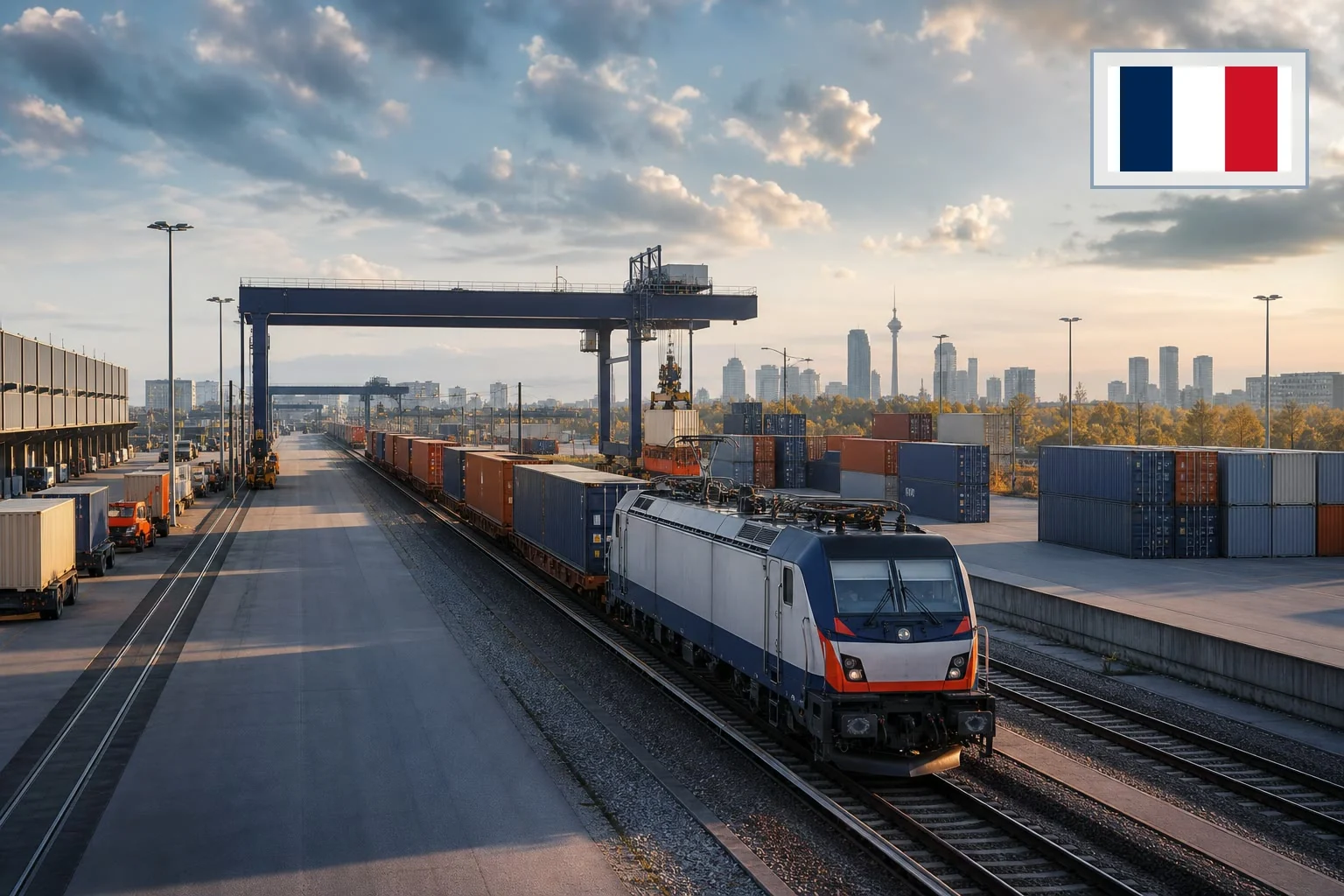
Rail alternative via EU
Gateways
France splits neatly by geography, and shipping into the wrong half of the country can add a long and avoidable domestic trucking leg.
France's main container port and the natural gateway for Paris, Normandy, and the north.
The Mediterranean gateway, shorter via Suez and the right choice for Lyon, Provence, and the south.
Northern alternative with good links into the Hauts-de-France region and onward into Belgium.
Mode planner
Northern France is served through Le Havre and Dunkirk, the south through Marseille-Fos. Rail into a neighbouring EU terminal with a road leg onward is also a genuine option on this lane.
| Mode | Planning range | Best for |
|---|---|---|
| Air freight | 3–7 days | Launch stock and urgent replenishment |
| Express courier | 3–7 days | Samples, spares, small parcels |
| Rail plus road | 20–26 days | Volume that cannot wait for the ocean leg |
| Sea FCL | 28–38 days | Planned volume, lowest cost per unit |
| Sea LCL | +5–8 days | Smaller or multi-supplier volume |
French & EU customs
France applies the EU Union Customs Code and common tariff, with declarations filed through DELTA. The significant local difference is import VAT: since 2022 it is self-assessed on the French VAT return rather than paid to customs at the border, which improves cash flow but requires a French VAT registration to work.
| Requirement | Who handles it | When |
|---|---|---|
| EU EORI number | Importer — mandatory | Before first import |
| French VAT registration | Importer, for TVA self-assessment | Before first import |
| DELTA declaration | Broker — Prodoer coordinates | At import |
| TARIC commodity code | Broker — Prodoer | Before entry |
| EU common customs tariff duty | Importer | At entry |
| Import TVA 20% | Importer, on the VAT return | On the return |
| ICS2 advance cargo data | Carrier | Pre-arrival |
| CE marking and product compliance | Importer, product dependent | Before sale |
How the lane runs
We confirm your EU EORI and whether you hold a French VAT registration, since that decides how import TVA is handled.
Le Havre, Fos, or Dunkirk chosen against the delivery region, with FCL priced against LCL on measured volume.
Vessel milestones, transshipment, and ETA changes in one thread.
Declaration, duty, TVA treatment, then trucking to the receiving window.
By sea, 28–38 days into Le Havre or Dunkirk and 26–33 days into Marseille-Fos, which is closer via Suez. By air, 3–7 days door to door into Paris. Rail into a neighbouring EU terminal with a road leg onward runs roughly 20–26 days and is worth quoting when the sailing schedule does not fit.
Geography decides it. Le Havre serves Paris, Normandy, and the north and has the widest sailing choice. Marseille-Fos is the Mediterranean gateway, has a shorter sailing via Suez, and is clearly better for Lyon, Provence, and southern France. Shipping into the wrong end of the country can add a domestic trucking leg that costs more than the ocean difference saved.
Since 2022 import TVA is self-assessed on the French VAT return rather than paid to customs at the border. For an importer holding a French VAT registration this is a genuine cash-flow improvement, because the money is accounted for rather than advanced. The prerequisite is the registration itself — the mechanism assumes you have one, so importers without a French VAT number should settle that before shipping.
The rules are the same, the plumbing is not. Both apply the EU Union Customs Code and the same common tariff, so your duty rate does not change between them. What differs is the national declaration system — DELTA in France, ATLAS in Germany — and the local VAT mechanism, where France's self-assessment differs from the German approach of paying or deferring at import.
Yes, and it is a common arrangement. Once goods are released into free circulation in France they move within the EU without further customs formality. Whether it is the right choice depends on where your VAT registration sits and where the goods are actually consumed — get that wrong and you create a VAT reporting problem in place of a customs one. Tell us the final destination and we will flag it.
China → France lane quote
Send the cargo, French destination, and your EORI and TVA position. One agent replies with the port comparison, the duty and VAT treatment, and the delivery plan.
Send the cargo, French destination, and your EORI and TVA position. One agent replies with the port comparison, the duty and VAT treatment, and the delivery plan.