Manzanillo
Mexico's busiest container port and the primary Pacific gateway for cargo from Asia, with rail and road inland.

Country guide · China → Mexico
Ocean into Manzanillo, Lázaro Cárdenas, Veracruz, and Ensenada, plus air into Mexico City, Guadalajara, and Monterrey. Mexico has two structural requirements that surprise first-time importers: you must be enrolled in the importer registry, and a licensed Mexican customs broker must file the entry. Neither is optional.
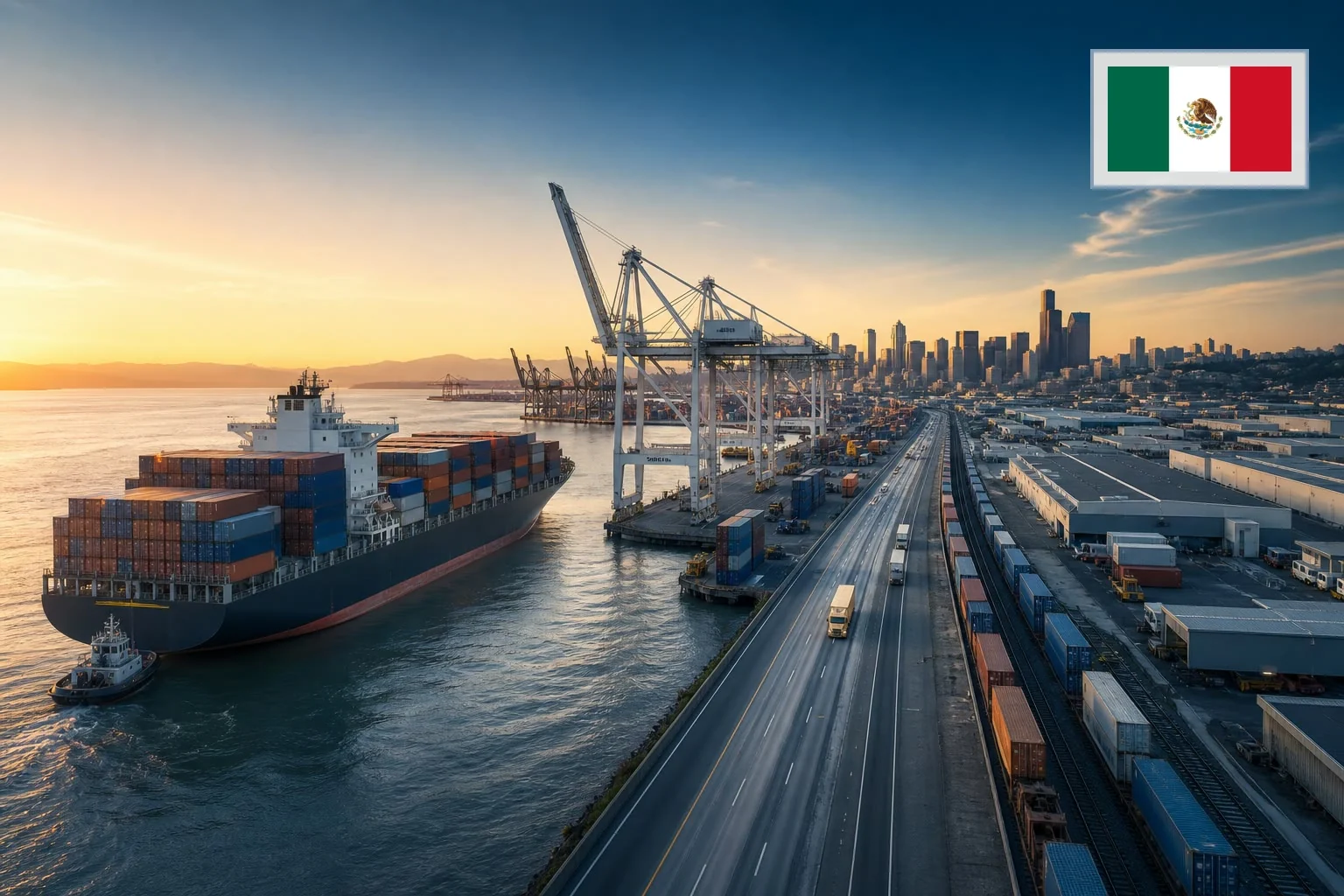
Manzanillo sea range
IVA on most imports
Mexican gateways
Licensed broker filing
Gateways
Nearshoring has pushed volume through the Pacific ports, and congestion there is a real planning factor rather than a theoretical one.
Mexico's busiest container port and the primary Pacific gateway for cargo from Asia, with rail and road inland.
Deep-water Pacific alternative with strong rail connections into central Mexico and onward to the US border.
The Gulf gateway. Much longer from China, so only worth it when the delivery point is genuinely on that side.
Along with Guadalajara and Monterrey, for time-sensitive cargo and manufacturing replenishment.
Mode planner
The Pacific ports are much closer to China than the Gulf side. Manzanillo and Lázaro Cárdenas are the default, with Veracruz worth considering only when the delivery point is genuinely on the Gulf coast.
| Mode | Planning range | Best for |
|---|---|---|
| Air freight | 4–8 days | Launch stock and urgent replenishment |
| Express courier | 4–8 days | Samples, spares, small parcels |
| Sea FCL — Manzanillo | 16–24 days | Central Mexico, Bajío, Guadalajara |
| Sea FCL — Lázaro Cárdenas | 17–24 days | Central Mexico with rail connections inland |
| Sea FCL — Veracruz | 30–40 days | Gulf coast and eastern Mexico |
| Sea LCL | +5–8 days | Smaller or multi-supplier volume |
Mexican customs & compliance
Mexican import clearance has structural prerequisites rather than just paperwork. The importer must be enrolled in the Padrón de Importadores, and the pedimento must be filed by a licensed Mexican customs broker — you cannot self-file. Add NOM product standards for many categories and you have three things worth confirming before a container leaves China.
| Requirement | Who handles it | When |
|---|---|---|
| Padrón de Importadores enrolment | Importer — mandatory | Before first import |
| Licensed customs broker | Legally required for the entry | At import |
| Pedimento declaration | Broker — Prodoer coordinates | At import |
| RFC tax registration | Importer | Before first import |
| HS classification and duty | Broker | Before entry |
| IVA 16% | Importer | At entry |
| NOM standards and labelling | Importer, product dependent | Before sale |
| Certificate of origin where claimed | Shipper | With documents |
How the lane runs
We check that you are enrolled in the importer registry, hold an RFC, and have a licensed broker appointed, since none of these can be improvised at the port.
Classification sets duty and flags whether NOM labelling or certification applies to the product before it can be sold.
Manzanillo or Lázaro Cárdenas against the delivery point, with congestion factored into the schedule.
Broker files the pedimento, duty and IVA are settled, then trucking or rail to your plant or warehouse.
By sea, 16–24 days into Manzanillo or Lázaro Cárdenas on the Pacific side, or 30–40 days into Veracruz on the Gulf. By air, 4–8 days door to door into Mexico City, Guadalajara, or Monterrey. Pacific port congestion has been a genuine planning factor as nearshoring volume has grown, so we build realistic dwell into the schedule rather than quoting a best case.
It is Mexico's importer registry, and enrolment is mandatory before you can import commercially. Without it the entry cannot be filed, regardless of how complete the rest of your paperwork is. Enrolment takes time and has its own requirements, so it needs to be underway well before your first container sails — this is the most common reason a first Mexican shipment stalls.
No. Mexican law requires the pedimento to be filed by a licensed customs broker, an agente aduanal, so broker involvement is a legal requirement rather than a convenience. We coordinate with a licensed broker and prepare the document set they need, but the filing itself must go through them.
NOMs are Mexican official standards, and a wide range of products fall under them — typically requiring specific Spanish-language labelling, and in some categories certification, before goods can be sold. It is a market-access requirement rather than a customs one, but it bites at the border when labelling is missing. Send the product details and we will flag whether a NOM is likely to apply so the labelling can be done at origin rather than reworked in Mexico.
Duty depends on your classification, and IVA of 16 percent applies to most imports. Depending on the goods and your programme status there may be other charges. Manufacturers operating under IMMEX or similar programmes have different treatment for temporary imports, which is worth raising at quote time if it applies to you, since it materially changes the landed cost.
China → Mexico lane quote
Send the cargo, Mexican destination, and your importer registry status. One agent replies with the gateway comparison, the duty and IVA position, and any NOM exposure.
Send the cargo, Mexican destination, and your importer registry status. One agent replies with the gateway comparison, the duty and IVA position, and any NOM exposure.