
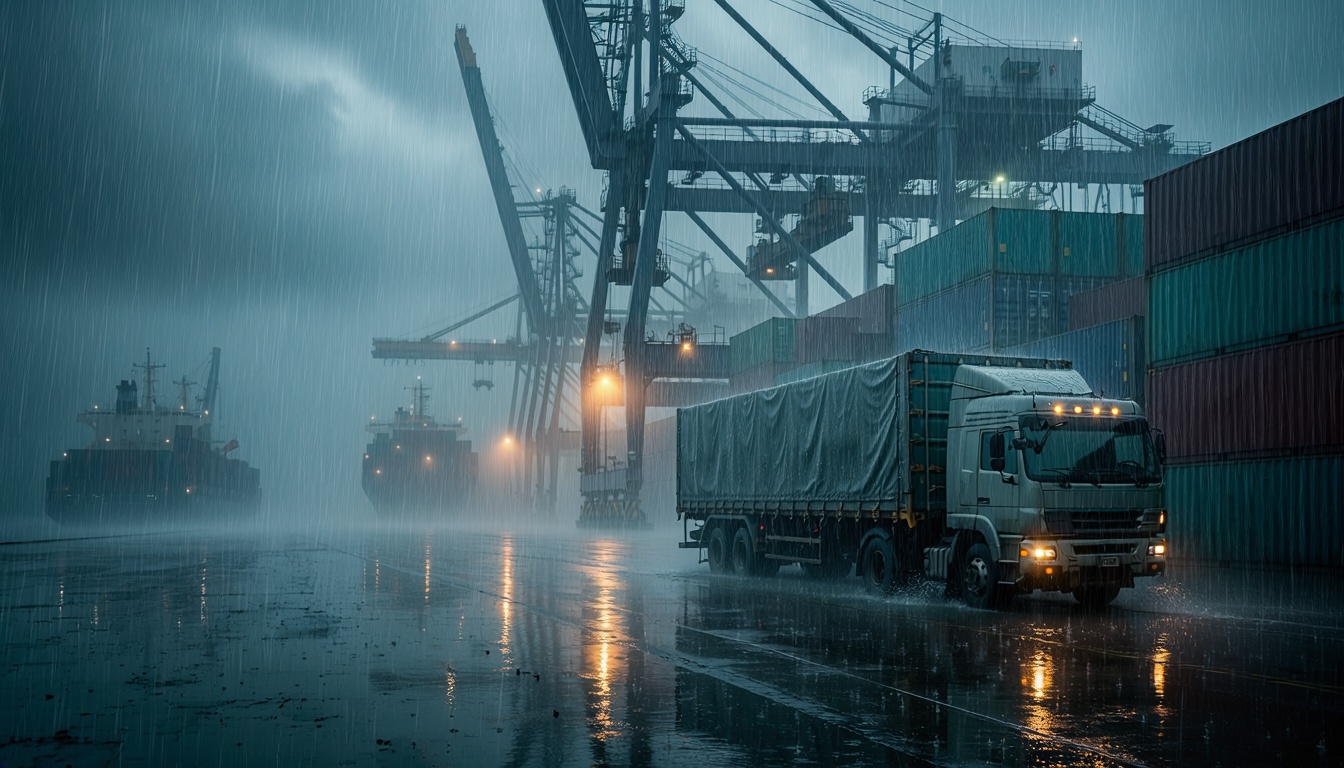
Monsoon shipping delays in Asia usually begin on land: flooded access roads, slower container-yard moves, interrupted CFS work, and missed cutoffs. Ordinary rain rarely stops an ocean vessel by itself, but the combined effect across trucking, terminals, airports, and warehouses can move a shipment into the next sailing or delivery window.
This guide is for importers, supply-chain teams, and e-commerce operators shipping from China and other Asian origins. It explains when the main rainy seasons occur, where delays form, and what to confirm before cargo leaves the supplier.
Quick answer: how should importers plan for monsoon shipping delays?
Treat monsoon risk as a chain of handoffs, not a single port event. Confirm the origin weather window, protect the cargo from moisture, reserve time before the carrier cutoff, and agree on an escalation path before pickup. The correct buffer depends on sailing frequency, transshipment exposure, cargo sensitivity, and the receiving deadline.
Key takeaways
Plan by exact origin, not by “Asia.” South China, the Yangtze River Delta, India, Japan, the Philippines, and equatorial Southeast Asia do not share one rainy-season calendar.
The first mile is often the weak point. A vessel may sail while the factory truck, container gate, CFS, or airport transfer is delayed.
A weekly service creates a seven-day schedule risk. Missing one cutoff matters more than losing a few hours to rain.
Moisture control must match the cargo. Electronics, textiles, paper, furniture, metal products, and food-grade packaging need different barriers, desiccants, and loading controls.
Climate windows are not forecasts. Recheck official warnings 72 hours before pickup and again before gate-in or airport handover.
Asia rainy-season shipping calendar by origin
The windows below are planning references. Onset and withdrawal dates change each year, and tropical cyclones can create disruption outside the core monsoon period.
Origin region | Typical weather window | Freight watchpoint | Official reference |
|---|---|---|---|
South China: Shenzhen, Guangzhou, Hong Kong | Heavy-rain exposure is highest from roughly April to September; tropical-cyclone risk is greatest from July to September | Factory pickup, low-lying roads, terminal gates, feeder connections | |
Yangtze River Delta: Shanghai, Ningbo and nearby factories | Meiyu commonly affects the lower Yangtze from early June to mid-July; tropical-cyclone exposure follows later in summer | Drayage, river and coastal feeder schedules, terminal stop-work notices | |
Japan | Baiu generally runs from early June to late July across most districts; Okinawa and Amami start earlier | Port and airport access, domestic trucking, later-summer typhoon routing | |
India | The southwest monsoon season is June to September, but progress and intensity vary by region and year | Port hinterland roads and rail, CFS dwell, inland pickup and delivery | |
Philippines | The national rainy season is broadly June to November, with large regional differences | Tropical-cyclone diversions, feeder reliability, island connections | |
Singapore and nearby equatorial hubs | Southwest monsoon runs June to September; the wetter phase of the northeast monsoon is usually December to January | Squalls, transshipment connections, yard and road conditions |
The table is deliberately regional. A Shenzhen–Los Angeles FCL shipment, a Dhaka–Rotterdam garment consolidation, and a Singapore transshipment need different controls even when all three move during “monsoon season.”
Where monsoon delays enter the freight chain
1. Factory pickup and empty-container release
Waterlogged roads, traffic controls, and reduced visibility can delay an empty container reaching the factory. If loading starts late, the truck may miss the terminal gate cutoff even when the vessel schedule is unchanged. Confirm the empty-release location, pickup appointment, route, and driver contact before the weather window closes.
2. Loading, CFS, and cargo protection
LCL cargo has more exposure points than sealed FCL cargo because cartons move through a consolidation warehouse. Wet pallets, open dock doors, and delayed consolidation can all increase moisture risk. Ask the CFS or warehouse to keep cargo off the floor, photograph the outer packaging, and record any wet or crushed cartons before acceptance.
3. Terminal and port operations
Heavy rain can reduce yard productivity; thunderstorms and high winds can pause crane, lashing, or dangerous-goods work under local safety rules. The operational question is not “Is the port open?” but “Is our terminal accepting gates, is our vessel alongside, and is our container loaded?”
For China-port storm planning, use the more detailed typhoon delay guide for China importers. For the wider weather-risk framework, see Extreme Weather and Logistics.
4. Airport handling and capacity
Thunderstorms can interrupt ramp work and create departure queues even when the airport remains technically open. Ocean shippers may also buy emergency air capacity after a missed sailing, tightening space. If the receiving date is critical, price a small priority-air fallback before the disruption rather than after capacity has compressed.
5. Destination delivery
Weather risk does not end at departure. Vessels can arrive in bunches after a closure, while the destination warehouse may have limited receiving slots. Build the final-mile appointment, customs release, free-time clock, and consignee availability into the same plan. Our door-to-door transit-time guide explains why port arrival is not the delivery date.
Mode-by-mode monsoon risk
Mode | Most common failure point | Practical response |
|---|---|---|
Ocean FCL | Missed gate cutoff, terminal pause, vessel bunching | Load earlier, inspect the container, secure the seal, and leave one workable gate window before cutoff |
Ocean LCL | Wet handling at origin CFS and slower consolidation | Use moisture-resistant outer packaging, allow CFS buffer, and require exception photos |
Air freight | Ramp stoppage, flight cancellation, recovery-capacity shortage | Hold alternate hubs and flights, keep documents ready, and split only the urgent quantity |
Rail from China | Flood-related speed restrictions or terminal access delays | Protect against moisture, preserve schedule buffer, and confirm the alternate terminal path |
Trucking and drayage | Closed roads, low-clearance flooding, missed appointments | Confirm route and driver status, avoid last-minute pickup, and keep the receiver informed |
A practical monsoon freight checklist
Before booking
Record the factory, port or airport, transshipment hub, destination, carrier cutoff, and must-deliver date.
Identify the shipment's moisture sensitivity and the cost of missing one sailing or delivery appointment.
Ask for two routings only when both are genuinely bookable; a theoretical alternate port is not a contingency plan.
Confirm who can approve a mode switch, split shipment, or extra origin storage charge.
Check whether cargo insurance addresses physical water damage and what evidence the insurer requires. Delay alone and cargo damage are different events.
72 to 24 hours before pickup
Review the relevant national meteorological warning and the carrier or terminal notice.
Reconfirm the pickup vehicle, empty release, warehouse appointment, gate cutoff, and document status.
Decide whether to pre-pull the container, move cargo into a dry warehouse, or keep it at the factory.
Freeze the escalation contacts: shipper, driver, forwarder, terminal or CFS, carrier, consignee, and customs broker.
At loading and handover
Photograph the empty container floor, roof and sidewalls, door seals, and any visible repair before loading.
Reject standing water, holes, strong odour, damaged door gaskets, or a floor that is visibly wet unless the issue is corrected and documented.
Keep cartons off the container floor and away from sidewalls where the packaging design permits.
Record the seal number and photograph the sealed doors.
At every later handover, document wet, torn, crushed, or repacked cargo before signing a clean receipt.
How much schedule buffer should you add?
There is no universal “monsoon delay” number. Build the buffer from the consequences of the next missed handoff:
Daily or near-daily air service: protect the airport handover and leave room for recovery onto the next flight.
Weekly ocean service: missing one cutoff can create roughly a seven-day schedule impact before congestion or transshipment effects.
LCL consolidation: include the CFS receiving and consolidation calendar, not only the vessel cutoff.
Fixed retail launch or production shutdown: price a split shipment in advance, with only the critical quantity moving by air.
This is more reliable than adding the same three or five days to every lane. Ask the forwarder to show which handoff the buffer protects and what decision is triggered if that milestone slips.
Packaging for monsoon and high-humidity freight
Container desiccants are not a complete packaging plan. Their quantity depends on cargo moisture, packaging permeability, voyage duration, container condition, and expected temperature change. Combine the appropriate desiccant with dry pallets, moisture-resistant outer packaging, sealed inner barriers for sensitive goods, and a loading inspection.
Do not wrap visibly wet cartons and load them into a sealed container. That traps moisture inside the shipment. For high-value electronics, precision parts, textiles, paper products, furniture, or corrosion-sensitive machinery, agree the packaging specification with the supplier and insurer before pickup.
Frequently asked questions
Does monsoon rain stop container ships?
Ordinary rain rarely stops an ocean vessel by itself. Delays more often come from flooded access roads, slower yard work, thunderstorm or high-wind safety pauses, missed terminal cutoffs, and later vessel bunching. Tropical cyclones are a separate escalation and can close ports or force route changes.
When is monsoon season for shipping from China?
South China has its main heavy-rain exposure from roughly April to September. The lower Yangtze's Meiyu period commonly falls from early June to mid-July, while tropical-cyclone risk is more prominent later in summer. Exact timing varies each year, so check current China Meteorological Administration and local warnings.
Is FCL safer than LCL during the rainy season?
FCL usually has fewer cargo-handling points after sealing, while LCL passes through a consolidation warehouse and may be handled several times. That can make FCL easier to protect from wet exposure, but a damaged container or poor loading method can still create condensation and water-ingress risk.
Should I switch from ocean to air when heavy rain is forecast?
Not automatically. Air freight can face the same thunderstorms, ramp stoppages, trucking delays, and capacity pressure. Compare the receiving deadline, the value of avoiding a stockout, available flight options, and the quantity that is truly urgent. A small split shipment is often more controlled than moving everything.
How can I reduce moisture damage in a container?
Start with a dry, sound container and dry cargo. Use packaging barriers and desiccants sized for the commodity and voyage, keep cartons off wet surfaces, inspect door seals, and photograph the container before loading. If the cargo is highly sensitive, have the supplier and insurer approve the packing specification.
Who pays the extra cost when weather delays freight?
Responsibility depends on the sales terms, carrier terms, booked service, free-time rules, and the cause of each charge. Confirm in advance who approves storage, truck waiting, demurrage, detention, rerouting, or emergency air freight. Keep delay notices and handover evidence in the shipment file.
Build the rainy-season plan before pickup
Monsoon shipping delays are easiest to control before cargo leaves the supplier. Map the weather window, protect the cargo, preserve a workable cutoff margin, and name the person who can authorize the fallback. If you are planning a China-origin shipment, send Prodoer the cargo, pickup point, destination, mode, and required delivery date for a door-to-door lane review or freight quote.
Sources checked 27 August 2026: China Meteorological Administration, Hong Kong Observatory, Japan Meteorological Agency, India Meteorological Department, PAGASA, and Meteorological Service Singapore. Seasonal dates are climatological planning references, not shipment-specific forecasts.