Free zone storage
Goods held in a designated free zone sit under duty suspension. Nothing is payable while they stay there, which suits stock awaiting onward sale.

Sea freight · China → UAE
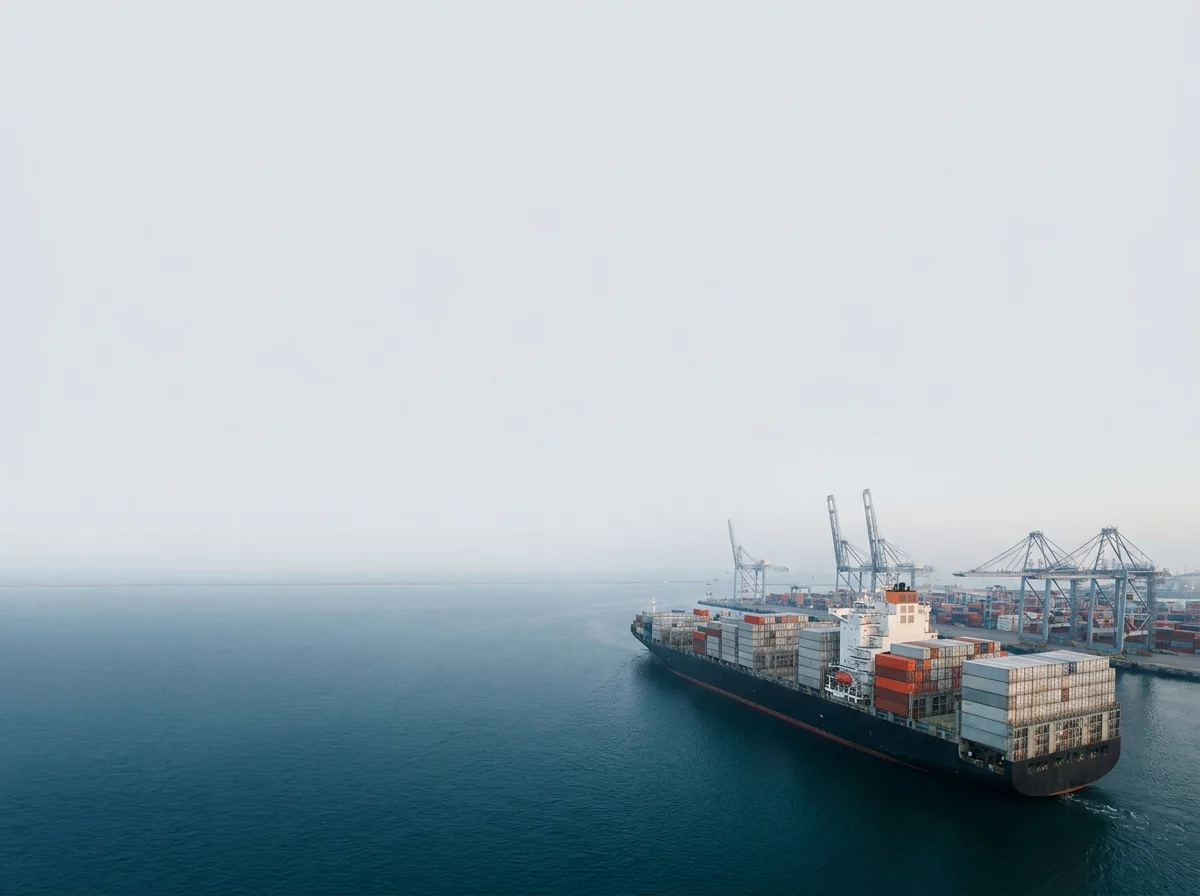
Weekly sailings from Shenzhen, Shekou, and Shanghai to Jebel Ali, Khalifa Port, and Sharjah in 18–25 days. The freight is straightforward; the duty bill depends on whether cargo stays in a free zone under suspension or crosses to the mainland. We structure that before quoting the rate.
Sea port-to-port range
UAE sea gateways
GCC duty + 5% VAT
duty suspension available
The decision that sets your duty
The UAE is a re-export hub as much as a consumption market. Getting the structure right is worth more than negotiating the freight rate.
Goods held in a designated free zone sit under duty suspension. Nothing is payable while they stay there, which suits stock awaiting onward sale.
Moving goods into the local market triggers 5% GCC duty and 5% VAT. The importer needs a trade licence and customs code.
Cargo passing through to another GCC state, Africa, or the subcontinent, handled under transit procedures rather than import.
Port-to-port planning
FCL planning ranges from Yantian, Shekou, Nansha, Shanghai, Ningbo, and Qingdao. The quote confirms the exact sailing and cutoff.
| Destination port | FCL planning range | Route note |
|---|---|---|
| Jebel Ali | 18-24 days | Dubai and free-zone gateway |
| Khalifa Port | 19-25 days | Abu Dhabi deep-water gateway |
| Sharjah | 20-26 days | Northern Emirates gateway |
UAE customs & compliance
UAE clearance is efficient when the paperwork matches and unforgiving when it does not. Invoice, packing list, and certificate of origin must agree exactly — mismatches are the usual cause of delay.
| Requirement | Who handles it | When |
|---|---|---|
| Valid trade licence | Importer — mandatory | Before first import |
| Customs client code | Importer — mandatory | Before first import |
| Customs declaration | Broker — Prodoer coordinates | At import |
| Certificate of origin | Shipper, attestation may be required | With documents |
| GCC duty 5% | Importer, on mainland entry | At entry |
| VAT 5% | Importer, on mainland entry | At entry |
How it works
We establish where the goods are going and what that means for duty, VAT, and which entity is on the declaration.
Invoice, packing list, and certificate of origin are checked against each other before the vessel sails.
Jebel Ali, Khalifa, or Sharjah against the delivery point and the storage plan.
Declaration, duty and VAT if entering the mainland, then delivery to the zone, warehouse, or onward carrier.
18–24 days into Jebel Ali and 19–25 days into Khalifa Port or Sharjah, plus five to eight days for LCL consolidation. The UAE is a short ocean run from China via the Indian Ocean.
Free zone means duty suspended — nothing is payable while goods stay there, which is why the UAE works as a re-export hub. The moment goods move to the mainland for local sale, 5% GCC duty and 5% VAT become payable. Decide before the cargo arrives, not after.
Duty is 5% under the GCC common tariff for most goods. VAT is 5% on mainland import. Both are suspended for free-zone storage. These rates are low, which is exactly why the structural question matters more than the rate.
To import into the mainland, the importer of record needs a valid UAE trade licence and a customs client code. Free-zone storage and pure transit work differently. Tell us your commercial setup at quote time.
Yes — cargo held in a free zone can be re-exported to other GCC states, East Africa, or the subcontinent without entering the UAE market. That is handled under transit or re-export procedures and changes both the documentation and the duty position.
Port-to-port measures only the main vessel or flight leg. Door-to-door also includes supplier pickup, export handling, consolidation, customs clearance, deconsolidation, appointments, and final delivery. Use the door-to-door range for inventory planning because those handoffs often explain more delay than the advertised main-leg transit.
China → UAE sea freight
Send the cargo, origin, UAE destination, and whether goods go to a free zone or the mainland. One agent replies with compared FCL/LCL rates and the duty position for that structure.
Send the cargo, origin, UAE destination, and whether goods go to a free zone or the mainland. One agent replies with compared FCL/LCL rates and the duty position for that structure.